The signs an agency has outgrown founder-run project tracking, what a project coordinator owns each week, how the role differs from a project manager, and how to test candidates.
The signs an agency has outgrown founder-run project tracking, what a project coordinator owns each week, how the role differs from a project manager, and how to test candidates.
How a growing online store moves customer service off the owner: the ticket types to hand over, the policies to write first, bilingual coverage and how to plan for peak season.
How a SaaS team splits support into tiers, what a remote L1 team owns, the escalation template engineers will accept, and the weekly quality review that protects CSAT.
What a SaaS founder should settle before adding SDRs in Latin America: time zone fit, a 90-day ramp, the numbers to coach on and the handoff to account executives.
An evening intake shift for insurance agencies: what the specialist does with a 7 p.m. quote request, the calling-hour and consent rules, and how leads reach a producer by morning.
Where the licensing line sits for unlicensed insurance agency staff, using the NAIC model act and Oklahoma's published list, plus scripts that keep intake on the right side.
What Model Rule 5.3 and ABA Opinions 08-451, 477R and 498 ask of a firm that adds a remote paralegal, with a supervision plan for a personal injury practice.
What a personal injury intake specialist handles, where the attorney has to take over, and the six numbers a managing partner should review every week.
When an HVAC, plumbing or electrical company should hire a bilingual customer service rep, what the rep does in each language, and how to test Spanish and English before you hire.
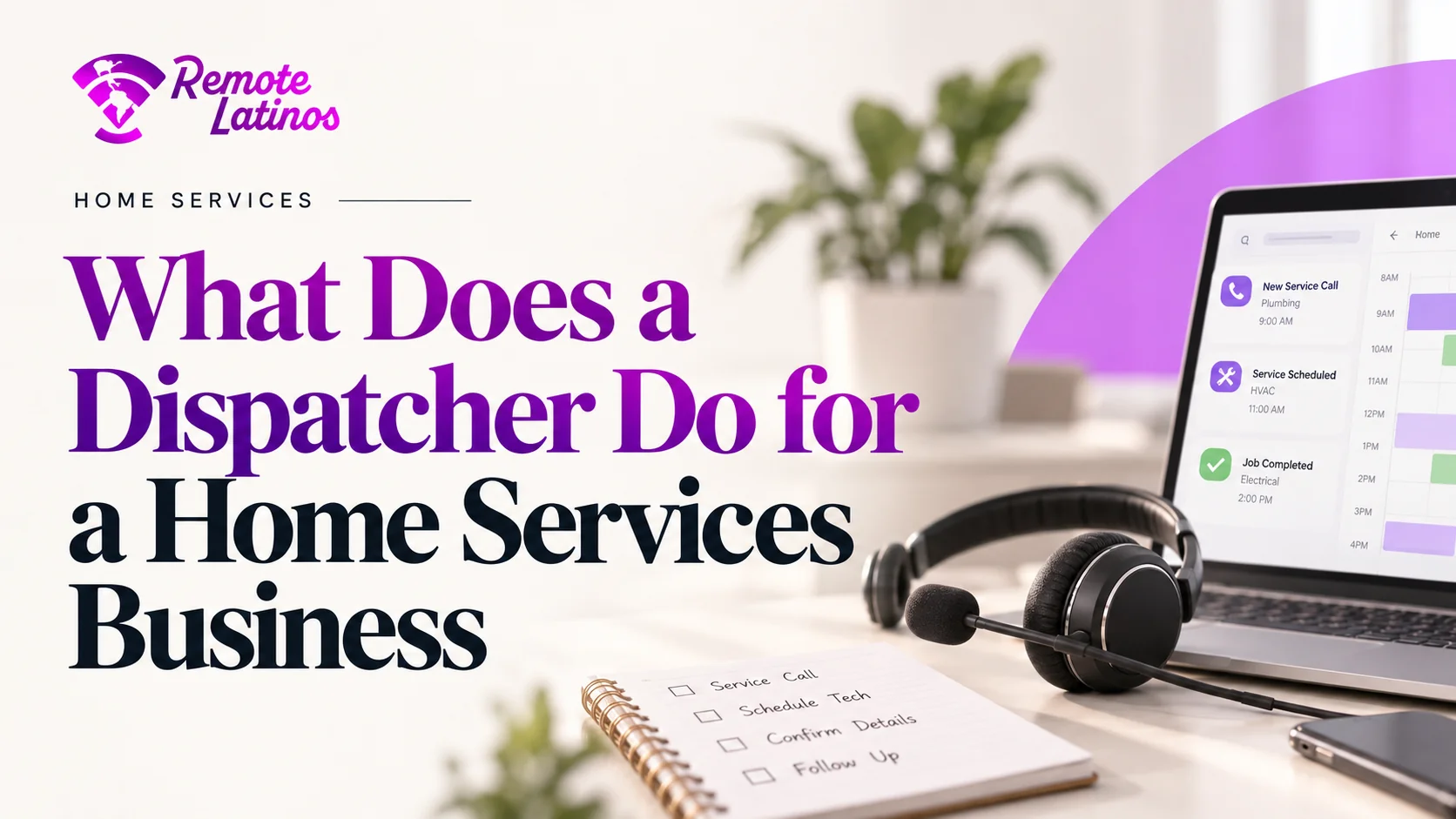
What a remote dispatcher does for an HVAC or plumbing company, the tools and access the role needs, how jobs pass between dispatcher, techs and owner, and how to test candidates.
Why HVAC and plumbing companies miss calls, how to measure it in your phone system, and how the options for covering the phones compare, from the owner to a dedicated CSR.
A country-by-country table of Latin American time zones against US Eastern and Pacific time, in US winter and summer, with sample shift hours and scheduling rules.
The paperwork, payment methods, currency choices and schedule a US company needs before it pays its first contractor in Latin America, plus the Venezuela checks.
What separates a good high-ticket closer from a pushy one, how to test candidates on a mock sales call, and how base, commission and refund rules fit together.
The six parts of an appointment setting script, with sample lines, qualifying questions written with the closer, objection replies and the rules for voicemails.
Base, commission, per-appointment and hybrid pay for appointment setters compared, with how to define a qualified meeting, handle no-shows and pay remotely.
A four-step test for cold caller candidates: interview questions that reveal real dialing experience, a scored role play, a CRM task and a paid trial shift.
When a marketing agency is ready for its own appointment setter, what that person does for new business, how to hand off booked calls, and what to measure.
Why Latin America works for a remote executive assistant: time zone overlap by city, how to test business English and judgment, and the contractor paperwork to settle.
A pre-start checklist for onboarding an executive assistant: which accounts to share and how, the inbox rules to write down, the first SOPs to record and a day-by-day week one.
The real difference between an executive assistant and a virtual assistant: scope, judgment, access and hours, plus a simple test to decide which one your business needs.
What a CEO's executive assistant should own in month one, the KPIs that show it is working, and a week-by-week plan for handing over the calendar and inbox.
The four pay structures investors use for appointment setters, what each one rewards, how to define a qualified appointment, and how to work out your real cost per appointment.
What a dispo manager owns between a signed purchase contract and the assignment closing, which parts can be done remotely, and how to score candidates before you hire.
A decision guide for wholesalers: what each role does, the signs you need one or the other, and why the order you hire them in changes how fast the second hire pays off.
When a brokerage or team needs a CRM administrator, the weekly and monthly checklist, the reports that person should own, and how to hire for the role.
How to set a speed-to-lead target your team can hold, who should own first response, a coverage plan by hour, and the calling and texting rules that apply.
A four-week order for handing work to a real estate virtual assistant, the tasks to keep with licensees, and how to find your own list with a one-week time audit.
What a remote transaction coordinator handles from contract to close, where the licensing line sits, and the handoffs that keep deadlines from slipping.
Which med spa front desk work a remote coordinator can own, from lead response to consult booking and rebooking, what stays with licensed providers, and how to set it up.
How the three common setups for dental insurance verification compare, what a full benefits breakdown should capture, and a verification timeline that keeps surprises off the schedule.
What the research says about reminders, a confirmation cadence by day, how to work the waitlist and missed-visit callbacks, and who on the team should own each step.
When HIPAA requires a business associate agreement for remote staff, what the contract must contain, how subcontractors fit in, and how to set up minimum necessary access.
A task-by-task list of dental front desk work a remote assistant can own, what stays chairside and at the window, and a 30-day handoff order that protects the schedule.
The calls a virtual medical receptionist can take, the ones that must go to clinical staff, and a pre-hire checklist covering the BAA, phone setup, scripts and coverage hours.
What a patient coordinator owns, which parts of the job work from a remote desk, what stays with your clinical team, and the HIPAA steps to settle before day one.
How accounting firms plan capacity after tax season so remote staff stay busy on extensions, bookkeeping and preparation for next year instead of being let go in May.
A stage-by-stage intake and document collection workflow a tax firm can hand to remote staff, with reminder timing, message templates and the handoff to preparers.
The tax season tasks a CPA firm can give a virtual assistant, the software they should learn, and the access and security setup to finish before January.
How a small business owner chooses between an in-house bookkeeper, a dedicated remote bookkeeper and a bookkeeping firm, with the signals that say it is time to hire.
Where the line sits between support work and preparer work in a tax or accounting firm, with a task-by-task table and a delegation order for the first month.
A month-by-month plan for small tax firms: which tasks to move off credentialed staff, when to hire, and the PTIN and data security rules to settle first.
Understand the prior authorization process for small practices, common denial reasons, and practical ways to reduce delays with better workflows and ePA.
What is an ISA in real estate? An inside sales agent who works leads and books appointments. See the lead volume that makes the hire pay, plus 2026 costs.
A marketing coordinator turns decisions into shipped work. They do not choose the strategy and they do not specialize in one channel. Here is what the role covers and when the seat pays for itself.
A dispatcher decides which technician goes to which job and what moves when the day breaks. The hour by hour role, the numbers that tell you it is working, and when the board outgrows the owner.
Write the plan backward. Decide what the person must be producing on day 90, then work back to what day 60 and day 30 have to look like. Two filled templates, for an executive assistant and an SDR.
A contingent worker works for your business without an expectation of ongoing employment. Learn the six types, the 2023 BLS data, the IRS classification test, and a simple rule for which roles to keep, flex, or place.
A legal intake specialist manages a law firm's first contact with prospective clients, from the first inquiry to a declined, referred, or opened matter. Learn the duties, ethics limits, cost, and how to hire one.
Write the SOP for the person doing the work, not for a binder. Learn the parts of a usable SOP, READ-DO vs DO-CONFIRM, and how to roll it out to a remote team.
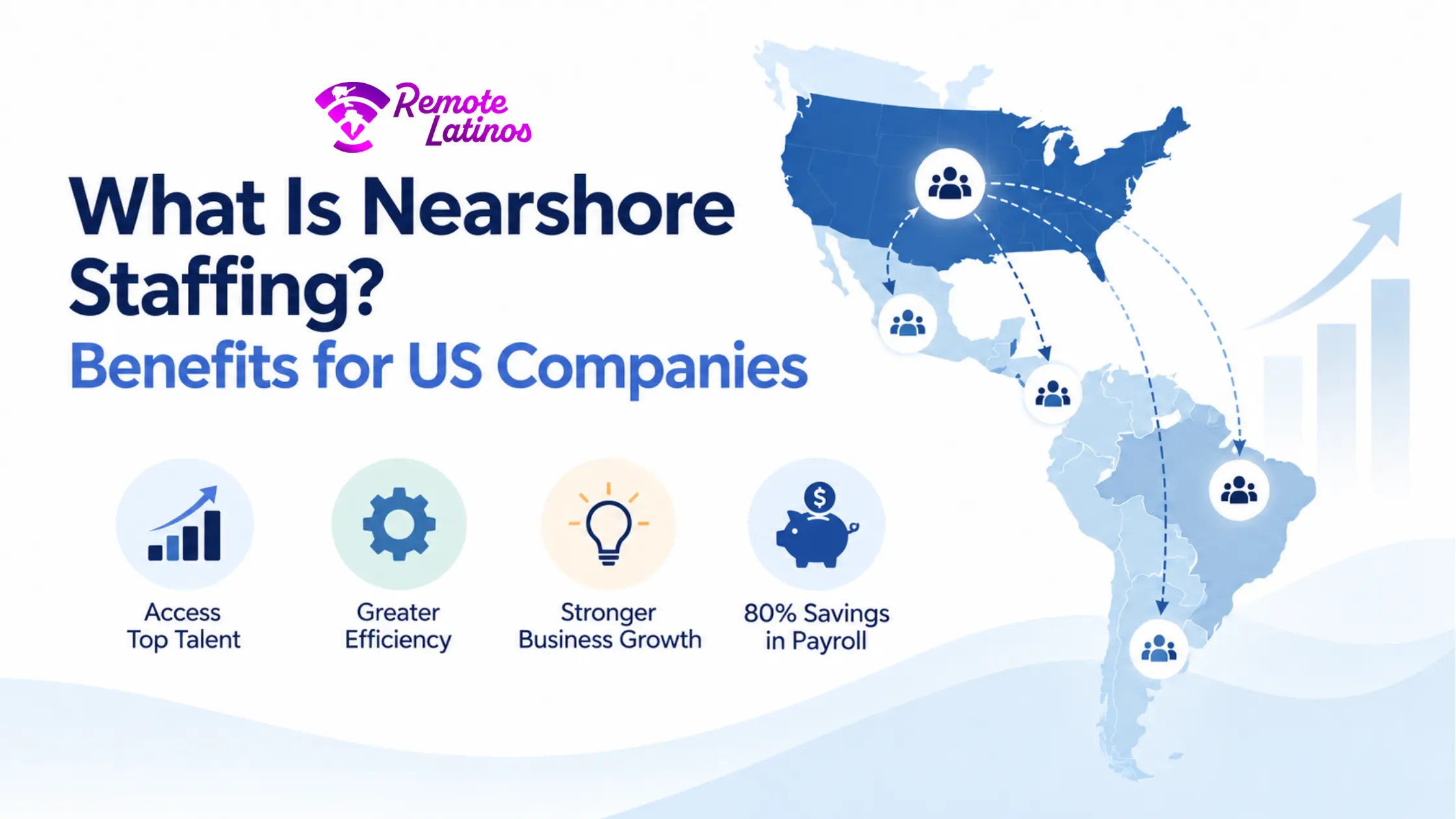
Nearshore staffing is hiring workers in a nearby country that shares a similar time zone, rather than locally or in a distant country. For US companies, nearshore usually means Latin America, where workers overlap the US business day and often speak fluent English.
Small business bookkeeping runs 300 to 2,500 USD a month outsourced. Learn what sets the cost, in house vs outsourced, and when to hand off your books.
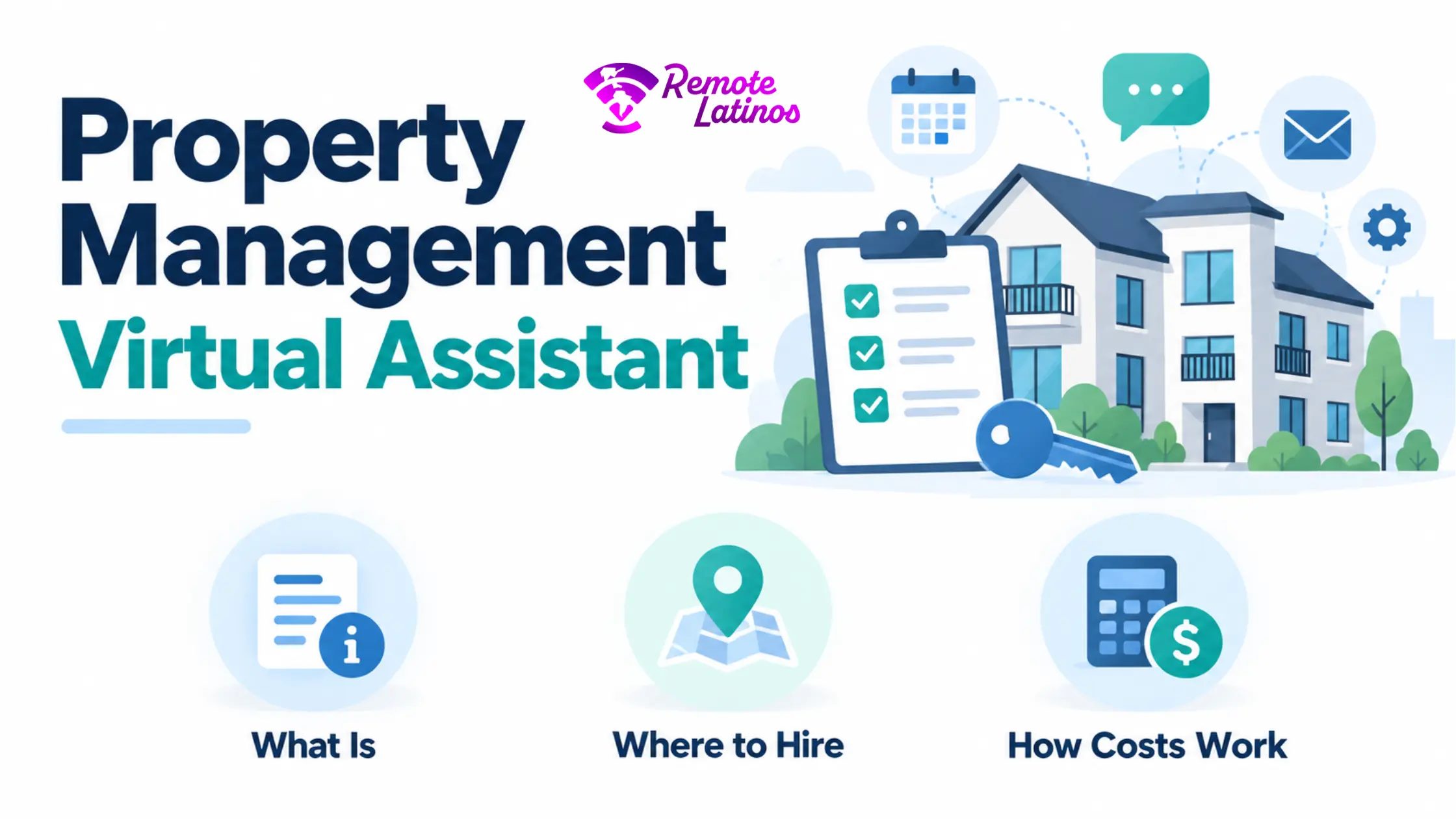
A property management virtual assistant handles tenant messaging, maintenance, rent, and listings. Learn the tasks, costs, and how to hire one for your rentals.
Recruitment process outsourcing (RPO) is a model where a company hands all or part of its recruiting to an external provider who manages the hiring process end to end, integrated with the company's own systems.
An inside sales representative sells remotely by phone, email, and video. Learn the role, inside vs outside sales, cost, and when to hire one for your team.
A social media manager plans content strategy, creates and schedules posts, replies to comments and direct messages, engages the target audience, and reports on reach, engagement, and conversions.
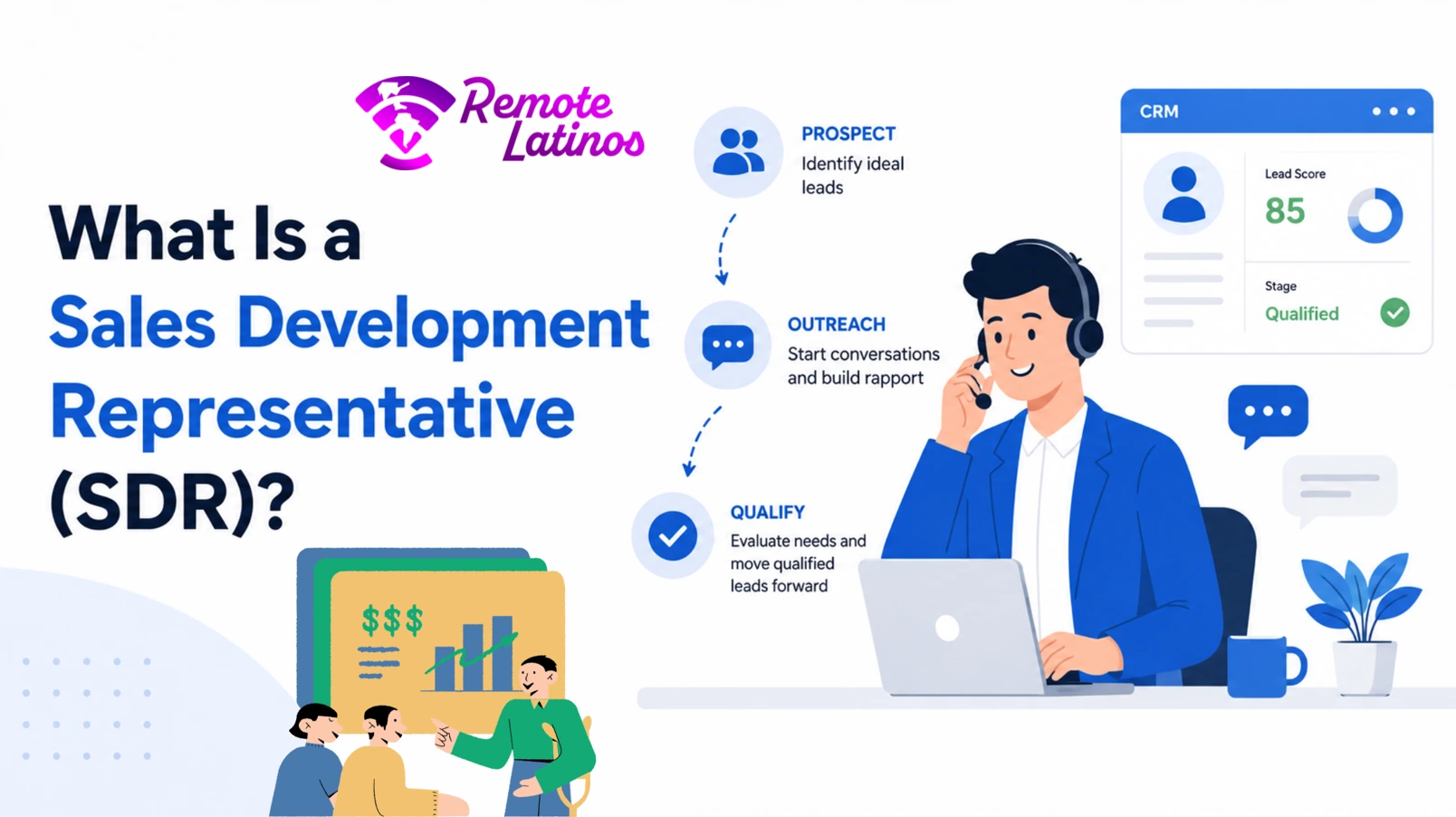
A sales development representative, or SDR, is a specialist at the front end of the sales process who qualifies inbound leads and runs outbound prospecting to generate pipeline. Sales development is a specialized role focused on the front end of the sales process, qualifying inbound leads or conducting outbound prospecting, to generate sales pipeline.
A cold caller is an outbound sales professional who contacts prospects who have not asked to be contacted, qualifies them against defined criteria, and passes the interested ones to a closer.
A cybersecurity advisory service is the fastest way for most business owners to close the gap between the security posture they have and the security posture the current threat environment demands.
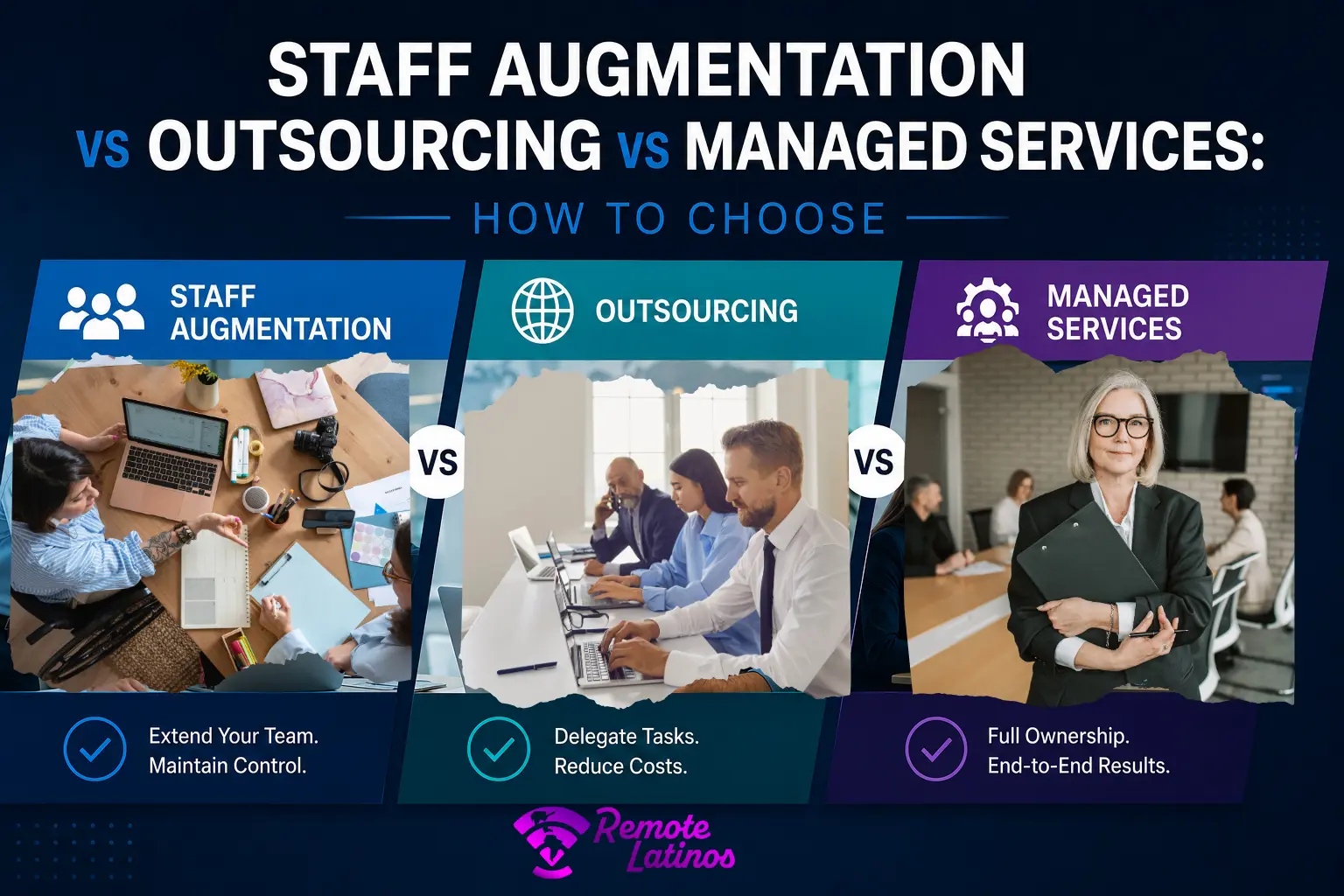
Staff augmentation, outsourcing, and managed services solve different problems. Learn how each model works, the side-by-side comparison with winners by scenario, when each one wins, and how nearshore Latin American talent fits inside each one for business owners in the US, UK, Canada, and Australia.
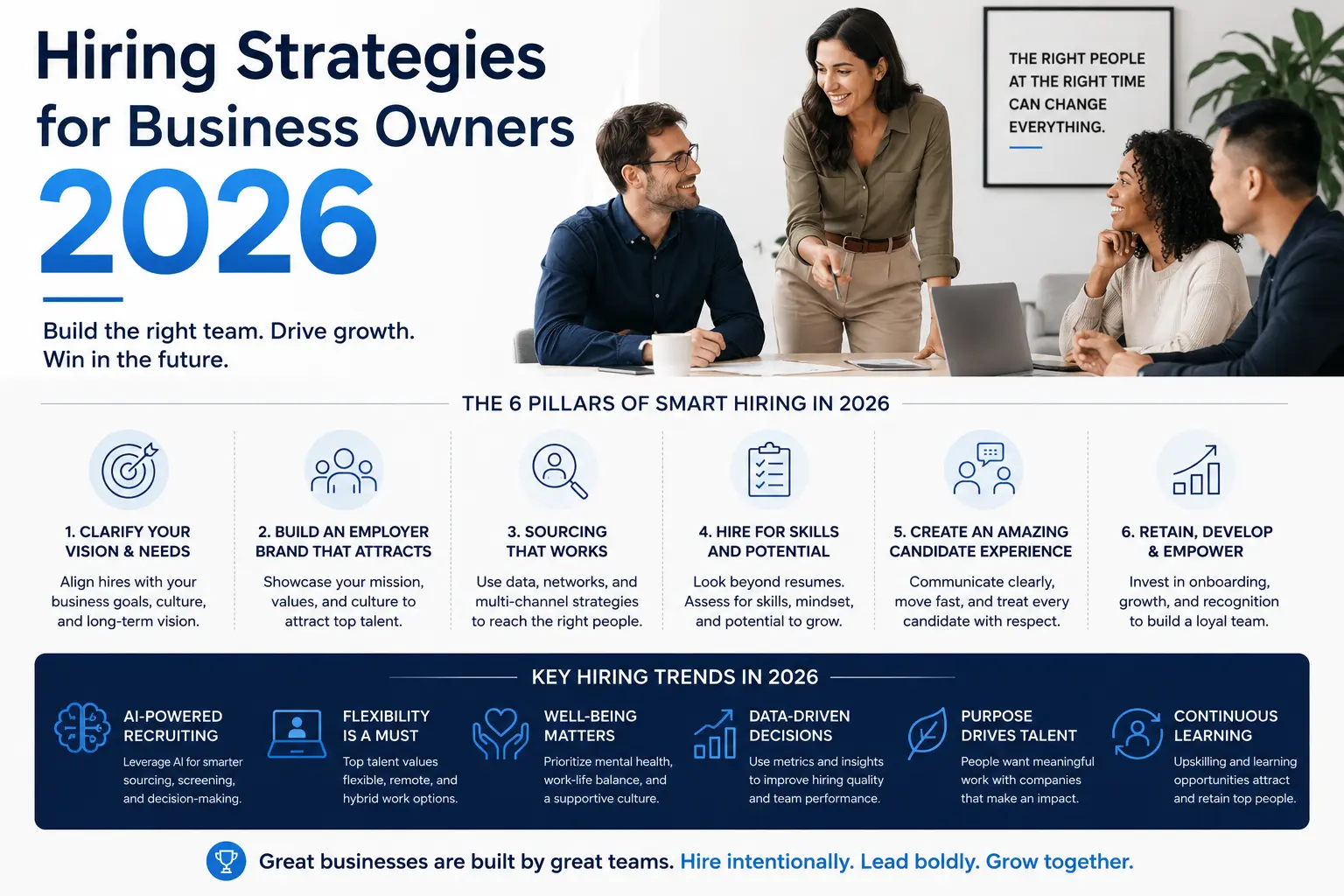
Hiring strategies turn hiring into a repeatable process that produces predictable results. Learn the 5 main types of hiring strategies, how to create one in 7 steps, and how Latin American talent fits modern hiring strategy with Remote Latinos.
Learn how to engage remote employees in a way that holds up under pressure. It draws from books on hiring, retention and remote work, plus field tested practices used by B2B operators.
A B2B appointment setter is a sales support professional whose primary function is to contact potential business clients, qualify them against a defined set of criteria, and schedule meetings.
Hiring tech talent is one of the highest-leverage decisions a company can make, and one of the easiest places to lose months if the process is unclear.
Understanding how to hire remote employees has become a core capability for modern businesses. Remote work is no longer a temporary adjustment or a niche benefit.
The most common hiring mistakes, why they happen, and how companies can avoid them by applying proven hiring frameworks, structured evaluation, and disciplined onboarding practices.
Hiring an AI-skilled virtual assistant is not about replacing humans with technology. The most effective organizations combine human judgment with intelligent systems.
If you want developers who deliver consistently, integrate quickly, and stay for the long term, you need a process rooted in how high performers think, how remote teams truly operate, and how modern workforces choose their opportunities.
Speed matters: startups must reduce hiring friction and focus on proven selection systems to avoid disaster hires. We show you exactly how to hire for a startu
The future of work is remote, and for busy entrepreneurs, executives, and business owners, the ability to hire a remote assistant can be the difference between burnout and growth.
A great CSM doesn’t just prevent churn, they drive revenue by ensuring every customer achieves measurable success with your product or service. Hiring the right Customer Success Manager can transform your business.
Customer experience defines brand success. As more businesses expand internationally, the need to hire customer service representatives (CSRs) who can communicate effectively, resolve issues quickly, and represent the company’s values has never been more important.
CEOs, founders, and entrepreneurs are choosing to hire remote executive assistants, professionals trained to manage high-level operations, scheduling, communication, and productivity, all without being physically present.
Hiring remote workers is legal, but only if they are properly classified. The distinction between an employee and an independent contractor determines tax obligations, benefits, and labor rights.
When companies talk about countries with top remote talent, Latin America consistently ranks at the top of global lists. But not all markets are equal. Certain countries stand out because of infrastructure, language skills, and professional experience.
Learn how to hire overseas talent legally and ethically. Check top regions, compliance tips, and strategies for onboarding and engaging international employees.
Before hiring in Latin America, it’s important to understand the broader context. Economic shifts, educational growth, and professional development trends shape the availability and quality of talent
Latin America is fast becoming the go-to source for skilled, bilingual, operations professionals who work U.S. hours, integrate seamlessly with your team, and deliver at a fraction of domestic costs.
Latin American professionals for business are a competitive advantage. LATAM professionals bring cultural alignment, strong work ethics, and real-time collaboration to the table, especially for U.S. and Canadian businesses.
The placements that work share one pattern: the company defined the outcome before it defined the person, hired for a seat that repeats every week, and kept the hire inside its own tools and hours.
Finding top-tier marketing and sales professionals is more competitive than ever. That’s why smart companies are looking to Latin America, a region full of skilled, bilingual, and results-driven talent.